
Training of Educators and Youth Workers
FROM LAUGHTER TO RESILIENCE
Joyful Minds equips educators and youth workers to support adolescent wellbeing through safe, inclusive humor
Four-day regional training • Blagaj near Mostar, Bosnia and Herzegovina • 6–9 July 2026
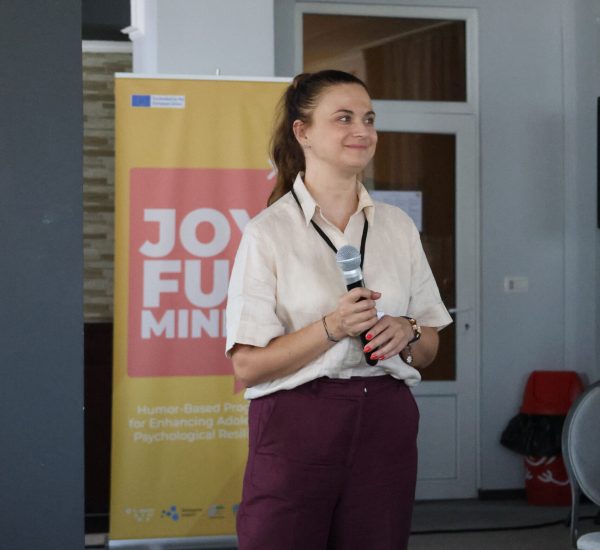
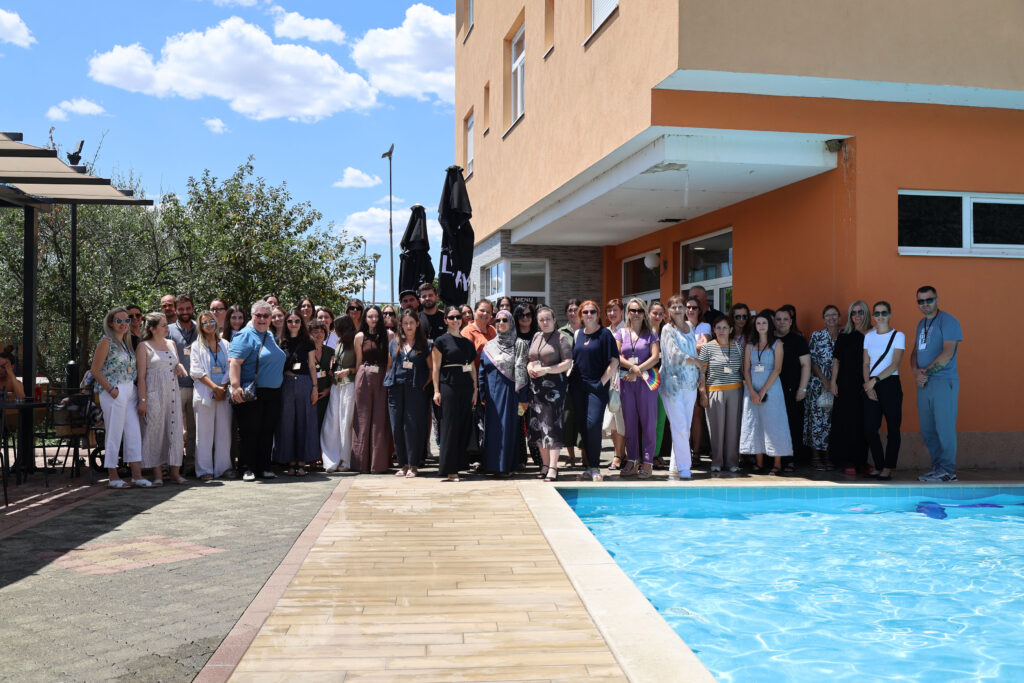
Can laughter become a pathway to trust, emotional awareness and resilience? This question was at the heart of a four-day regional training organised in Blagaj near Mostar under the Erasmus+ project “Joyful Minds – Humor-Based Program for Enhancing Adolescent Psychological Resilience.” From 6 to 9 July 2026, educators, youth workers and project partners explored how humor can be used thoughtfully, not simply to entertain, but to help adolescents connect, reflect and cope.
A shared regional learning space
The training brought together the Joyful Minds consortium: Genesis Project from Bosnia and Herzegovina, Forum for Freedom in Education from Croatia, Youth Can from North Macedonia, and Nisma për Ndryshim Shoqëror ARSIS from Albania. Working across different national and professional contexts, the partners focused on a common challenge: how to make support for adolescent mental health more approachable while preserving strong ethical and safeguarding standards.
The programme was designed as a practical learning journey. Participants first developed a shared understanding of the Joyful Minds methodology and curriculum logic, then experienced and debriefed the core workshops themselves. Daily reflection created space to question, adapt and strengthen the activities before their use with adolescents aged 12–18.
“Humor must be used to build trust, belonging and resilience, never to ridicule, label, exclude or pressure participants.”
— Joyful Minds training safeguarding principle
Learning by doing
Across the programme, humor became a lens for exploring several dimensions of resilience. In “Building Trust Through Shared Laughter,” the group examined how carefully facilitated laughter can strengthen connection and psychological safety. “Humor in Emotional Awareness” focused on recognising emotions and reframing experiences without dismissing difficult feelings. “New Perspectives on Failure” invited participants to consider mistakes as opportunities for reflection and growth, while “That’s How It Is” explored perspective-taking, acceptance and cognitive flexibility.
The “Digital Resilience – Memology Class” brought the conversation into the online spaces where adolescents communicate every day. By looking at memes, online humor, coping and boundaries, the session connected the curriculum to young people’s lived digital realities and encouraged educators to engage with those realities critically and respectfully.
Humor with care, choice and purpose
A central message throughout the training was that humor is never neutral. It can create belonging, but it can also reinforce exclusion if used carelessly. For that reason, the Joyful Minds approach places safeguarding at the centre of every activity. Examples should be age-appropriate and culturally adapted, with attention to identity, trauma, neurodiversity and the realities of young people in rural or remote communities.
The methodology also protects adolescents’ agency. Each exercise should include clear instructions, an option not to participate, a structured debrief and an explicit link to the intended resilience outcome. In practice, this means asking not only whether an activity is engaging, but also whether it is safe, inclusive and meaningful for every young person in the room.
“Laughter that connects, not laughter at someone else’s expense.”
An editorial summary of the Joyful Minds approach
From Mostar to local youth settings
The final day shifted the focus from learning to implementation. Partners worked on country-level timelines, recruitment channels, mentoring and supervision, documentation, and the feedback process that will inform the next version of the curriculum. The training evaluation framework was designed to assess knowledge, facilitation confidence, safeguarding readiness and preparedness to deliver the workshops in local contexts.
For Nisma ARSIS, participation in this regional process reinforces a long-standing commitment to child protection, psychosocial wellbeing and youth-centred services. It also creates an opportunity to adapt the methodology thoughtfully to the Albanian context, ensuring that language, culture, inclusion and safeguarding remain integral to implementation.
The Blagaj training marked an important bridge between curriculum development and real-world practice. The project’s ambition extends beyond one training event: through the educators and youth workers prepared by the consortium, Joyful Minds aims to strengthen the resilience of more than 1,000 adolescents across the participating countries.
The next chapter
As the consortium moves toward local delivery, the ideas tested in Mostar will continue to evolve through practice, mentoring and participant feedback. The goal is not to use laughter to avoid difficult conversations, but to help young people enter those conversations with greater trust, flexibility and hope.
Joyful Minds is implemented by a consortium led by Genesis Project, in partnership with Forum for Freedom in Education, Youth Can, and Nisma për Ndryshim Shoqëror ARSIS, with the support of the European Union’s Erasmus+ programme.
Project reference: 101243616 – ERASMUS-YOUTH-2025-CB